
The Reserve Bank of India's (RBI's) caution on inflation, highlighted during the recent monetary policy meeting, may put investors' faith in fast moving consumer goods (FMCG) stocks to test, analysts said. They, however, believe FMCG stocks may ride through this near-term investor anxiety as related companies are, typically, well-equipped to handle inflation due to their pricing power and steady demand for essential goods.

Far from reducing inflation, some of the assumptions made in the Budget imply that the government is not at all expecting prices to come down.
Addressing an international meet on key inputs for accelerated development of Indian power sector at New Delhi on Tuesday Montek Singh Ahluwalia, Deputy Chairman of Planning Commission said that India's growth projection could be trimmed due to a poor monsoon.
Finance Minister P Chidambaram said on Thursday that the government would ensure ample supplies of essential commodities including food grains to check prices and assured more fiscal steps to contain inflationary pressures.

Investors have become poorer by over Rs 10.36 lakh crore in the last four trading sessions as the domestic equity benchmarks extended their losses amid weak global trends. The Sensex and Nifty closed in the red for the fourth straight session on Friday amid continued selling by foreign institutional investors. The BSE Sensex ended 427.44 points or 0.72 per cent lower at 59,037.18.
RBI's policy statement highlights the fact that core consumer price inflation remains obdurately high at about eight per cent.

Consumer goods companies are apprehending a dip in demand due to petrol price hike and an imminent increase in diesel prices that are adding pressure to customers, who are already reeling under the recent spike in interest rates.

Fitch Ratings on Tuesday retained India's economic growth forecast at 7 per cent for the current fiscal, but cut projections for the next two financial years saying the country is not impervious to global developments. In its December edition of the Global Economic Outlook, Fitch projected India's GDP to grow at 7 per cent in the current fiscal, at a slower rate of 6.2 per cent in 2023-24 and at 6.9 per cent in 2024-25. In September, Fitch projected 7 per cent growth for the current fiscal, followed by 6.7 per cent in 2023-24 and 7.1 per cent growth in 2024-25.
entral banks should move well ahead of inflation becoming a problem, while governments typically wake up when inflation becomes a problem

The seasonally adjusted Nikkei India Services Business Activity Index fell to 50.2 in May, from 51.0 in April, pointing to the slowest growth rate in the current 12-month stretch of expansion.
Majority of India Inc is of the view that extreme moves in the form of monetary tightening made by the Reserve Bank to curtail inflationary pressure would slow down economic growth, a survey by industry chamber Assocham reveals.

Renewed inflationary pressures, led by a spike in prices of vegetables and cereals, have cast a spell on the equity markets in the past month. The BSE Sensex and Nifty50 have declined up to 2 per cent each during the period, clipping the 13 per cent rally from the March lows, shows data from ACE Equity. Investors typically consider shares of fast-moving consumer goods (FMCG) companies as defensive bets, putting their weight behind them in a falling market.

Industry chamber Assocham on Monday said that 2011 may witness continuation of high inflationary pressures, a view contrary to the government that expects inflation to slow down to around 6 per cent by March next year.

Automobile retail sales in India witnessed a double-digit year-on-year growth in February driven by robust sales across segments including passenger vehicles and two-wheelers, automobile dealers' body FADA said on Monday. Total registrations across segments rose 16 per cent year-on-year to 17,75,424 units last month, as compared to 15,31,196 vehicles in February 2022. Passenger vehicle retail sales rose 11 per cent to 287,182 units last month, against 258,736 units in the year-ago period.

Unemployment rate in the country has zoomed to a high of 8.3 per cent in December, the highest in 2022, according to data from Centre for Monitoring Indian Economy (CMIE). The unemployment rate during November was at 8 per cent, while in September it was the lowest at 6.43 per cent and was at the second highest level during the year at 8.28 per cent in August, the CMIE data stated. While the urban unemployment rate was at 10 per cent during the last month of 2022, rural joblessness stood at 7.5 per cent during December.

Broader markets end flat too after a volatile trading session.

The comments from Fitch sovereign analyst Art Woo sent the rupee lower, reinforcing worries that India is still at risk of losing its investment-grade rating from the credit agency.

The rating agency said that the 'Baa3' sovereign rating is supported by credit strengths which include a large, diverse economy, strong gross domestic product growth as well as savings, and investment rates.

Morgan Stanley draws optimism from a slew of favourable factors.

Net leasing of office space is likely to rise by 41-49 per cent across seven major cities this year on a lower base and improved demand post-pandemic, according to JLL India. Net absorption or leasing of office space stood at 26.2 million square feet in 2021, and it is likely to be in the range of 37-39 million square feet this year across seven cities -- Bengaluru, Delhi NCR, Chennai, Hyderabad, Kolkata, Mumbai and Pune. Nevertheless, the net office leasing will remain lower than the record absorption achieved in 2019 -- the pre-COVID year -- at 47.9 million square feet.
The IT spending in India is projected to total $71.5 billion in 2013, a 7.7 percent increase from the $66.4 billion forecasted for 2012, according to Gartner, Inc.
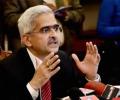
All members of the Monetary Policy Committee (MPC) -- Shashanka Bhide, Ashima Goyal, Jayanth R Varma, Mridul K Saggar, Michael Debabrata Patra and Shaktikanta Das -- had unanimously voted to keep the policy repo rate unchanged at 4 per cent after the three-day meet of the panel earlier this month. Further, except Varma, other members voted to continue with the accommodative stance as long as necessary to revive and sustain growth on a durable basis and continue to mitigate the impact of COVID-19 on the economy, while ensuring that inflation remains within the target going forward. Varma expressed reservations on this part of the MPC resolution, according to the minutes.
With inflation likely to rise further, the Reserve Bank may go in for an another hike in the key policy rates in its fourth quarterly Review, slated to be announced on January 25.

Gold exchange traded funds (ETFs) witnessed a net outflow of Rs 199 crore in January, making it the third monthly withdrawal in a row, with investors preferring equities over other segments on buoyant record SIP flow. This was in comparison to a net outflow of Rs 273 crore registered in the segment in December and Rs 195 crore in November. Prior to that, Gold ETFs attracted Rs 147 crore in October, data with Association of Mutual Funds in India (Amfi) showed.
Contrary to what was expected earlier this year, the global economy is not out of the woods.

The surprise decision of OPEC and its allies, including Russia, to cut oil output may cause an immediate rise in prices, delaying revision in fuel prices in India, industry sources said. The grouping of Organisation of Petroleum Exporting Countries (OPEC) and its allies, called OPEC+, on Sunday decided to further cut oil output by around 1.16 million barrels. The move led to Brent rising by almost 6 per cent to $84.58 per barrel on Monday.

New Delhi plans to cut public spending by up to 10 percent in the fiscal year starting in April, officials involved in the budget preparations told Reuters last week, as Finance Minister P Chidambaram struggles to bring down the fiscal deficit to 4.8 percent of gross domestic product and stave off a credit rating downgrade.

The liquidity in the banking system could ease in the coming week due to an increase in government spending - a development that would be the key for the Reserve Bank of India (RBI) to decide whether to extend the incremental cash reserve ratio (I-CRR) mandate for banks. There are signs of improvement in the liquidity scenario as banks parked Rs 25, 833 crore with the RBI on Thursday. Market participants expect liquidity to gradually improve by the end of the month or during the first week of September, aided by government spending.

Equity indices nursed losses for the second consecutive session on Tuesday as investors continued to dump IT, banking and FMCG stocks amid a bearish trend in global markets. Unabated foreign fund outflows and the rupee dropping to another record low against the US dollar added to the woes, traders said. Participants were also in wait-and watch mode ahead of release of retail inflation and factory output data.
Rupee, however, added some respite after strengthening for the first time today during the last five trading sessions.

IndusInd Bank was the top loser in the Sensex pack, shedding over 3 per cent, followed by HUL, ONGC, ICICI Bank, Axis Bank, Kotak Bank, M&M and Tech Mahindra. NSE Nifty tumbled 154.25 points to 14,696.50.

The quick survey done by Assocham found that during last year middle and lower middle income families on average spent nearly 29 per cent of their salary on Diwali for shopping, sweets, gifting etc.
Passenger vehicle retail sales in the country rose 40 per cent in June indicating an improvement in semiconductor supplies even as demand, especially for SUVs, remained robust, auto dealer' body FADA said on Tuesday. According to the Federation of Automobile Dealers Associations (FADA), passenger vehicle (PV) registrations rose to 2,60,683 units last month, as compared to 1,85,998 units in June 2021, registering an increase of 40 per cent. "The PV segment continued to see robust growth. An increase in dispatches clearly shows that semiconductor availability is now getting easier," FADA president Vinkesh Gulati said in a statement.
The study, conducted by travel portal TripAdvisor, also found that 44 per cent of Indians plan to spend more on leisure travel next year despite the current economic climate.

India's services sector activities touched the highest mark since April 2011 amid ongoing improvements in demand conditions, even as cost pressures in the service economy remained stubbornly high, a monthly survey said on Tuesday. The seasonally adjusted S&P Global India Services PMI Business Activity Index rose from 58.9 in May to 59.2 in June -- its highest mark since April 2011. For the eleventh straight month, the services sector witnessed an expansion in output. In Purchasing Managers' Index (PMI) parlance, a print above 50 means expansion while a score below 50 denotes contraction.

Indicating that recruitment activities have moderated, employment portal Naukri.com's job speak index remained almost flat last month compared to April.
India imports 80 percent of its oil, which adds to inflationary pressure.

The Nikkei India Services Purchasing Managers' Index (PMI), which tracks services sector firms on a monthly basis, stood at 48.7 in January, as against 46.8 in December 2016.
According to Manpower Employment Outlook Survey, India's net employment outlook -- an indicator of recruitment intentions -- stood at 46 per cent on a seasonally adjusted basis for the three-month period starting July, the most optimistic hiring environment across the world.

The stock of Aditya Birla Fashion Retail is down 10 per cent from its February high. Even as the revenue performance of the apparel retail major in the October-December quarter's for the 2022-23 financial year (Q3FY23) was better than expected, the company saw brokerage downgrades, given the weak operating performance and the pressure on margins. This the second consecutive quarter of margin miss despite strong traction on the sales front.
